I Found a Writhing Parasite in My Dinner and Almost Vomited
Introduction
There are certain moments in life that stop you cold, moments so sudden and disturbing that your mind instantly spirals into panic before logic has a chance to catch up. For me, that moment happened in my kitchen while cooking dinner. I found what appeared to be a writhing parasite in my frying pan, and I genuinely thought I was about to throw up. The horrifying sight sent my imagination racing toward every nightmare scenario possible. My stomach tightened, my skin crawled, and I became convinced that my food was contaminated with something dangerous and alive.
The experience was deeply unsettling because food is supposed to represent comfort, nourishment, and safety. Instead, my dinner suddenly looked like something out of a horror movie. In a matter of seconds, my brain filled with terrifying thoughts about hidden infections, unsafe meat, and microscopic organisms lurking in the food I had trusted enough to serve to my family countless times before. The fear was immediate, powerful, and almost impossible to control.
What made the experience even more intense was how real it felt in the moment. The object in the pan genuinely appeared to move and curl like a living creature. The hot oil, the shrinking meat, and the strange twisting motion created the perfect illusion of something alive. It triggered an instinctive survival response before I even had time to think rationally about what I was seeing.
The Moment Everything Changed
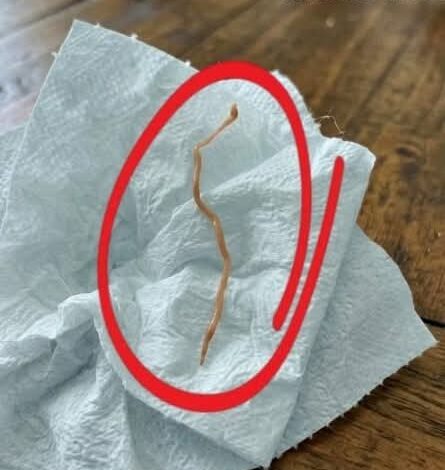
As I stood frozen over the stove, I could barely process what was happening. My appetite disappeared instantly, replaced by a wave of nausea and anxiety. I remember gripping the edge of the counter while staring into the pan, trying to understand what I was looking at. The object was thin, pale, and oddly translucent. Every small movement in the hot oil made it appear as though it was wriggling.
At first, I convinced myself there was no way it could be anything innocent. My mind immediately jumped to the worst possible conclusion. I imagined dangerous parasites hidden deep inside the meat, waiting to reveal themselves only after cooking. The more I stared, the worse my thoughts became.
It is incredible how quickly fear can overpower reason. Within seconds, my calm evening had transformed into a full-blown panic. I started questioning where the meat came from, whether it had been stored properly, and whether I had somehow missed warning signs before cooking it. The kitchen, which normally felt comforting and familiar, suddenly felt contaminated and threatening.
Looking Closer at the “Parasite”
Eventually, I forced myself to stop panicking long enough to investigate the situation properly. Even though every instinct told me to throw the pan into the trash and run out of the kitchen, curiosity slowly overpowered fear. I grabbed a fork, leaned closer, and carefully pinned the object against the pan to get a better look.
That was the exact moment when reality finally began to replace imagination.
The horrifying “parasite” was not a parasite at all. It was simply a tendon — a normal piece of connective tissue from the pork ribs I was cooking. The heat had caused the tissue to tighten, curl, and shift in the rendered fat, creating the illusion of movement. Under the intense heat of the frying pan, the tendon had twisted itself into something that looked disturbingly alive.
The realization hit me with equal parts relief and embarrassment. I felt foolish for panicking so dramatically, but at the same time, I knew my reaction had been completely human. When something unfamiliar suddenly appears in your food, especially when it resembles a living organism, your brain naturally prepares for danger before logic has a chance to intervene.
Why Fear Takes Over So Quickly
Experiences like this reveal just how powerfully the human mind is wired for survival. Our brains are designed to detect threats immediately, even when those threats are not actually real. It is an ancient protective instinct that once helped humans avoid poisonous plants, spoiled meat, and dangerous animals.
In modern life, however, that same instinct can sometimes work against us.
When I saw the tendon moving in the hot oil, my brain did not pause to calmly analyze the situation. Instead, it instantly created a terrifying explanation because survival instincts prioritize speed over accuracy. The brain would rather mistakenly identify something harmless as dangerous than risk ignoring a real threat.
That is why even intelligent and rational people can react dramatically to harmless situations. Fear does not wait for evidence. It acts first and asks questions later.
The Psychology of Food Panic
Food-related fear is especially powerful because eating requires trust. Every meal involves an unspoken assumption that what we are consuming is safe. When that trust suddenly feels broken, the emotional reaction can be overwhelming.
Many people have experienced moments where a harmless object in food triggered panic. Sometimes it is an unusual texture, a strange color, or an unfamiliar piece of anatomy in meat. Even though these things are often completely normal, they can still feel deeply disturbing when encountered unexpectedly.
In my case, the tendon looked foreign because I had never noticed one at that specific stage of cooking before. I had almost certainly cooked similar connective tissue many times in the past without realizing it. But under the right lighting and conditions, something ordinary suddenly appeared alien.
That realization became strangely humbling. It reminded me how limited perception can be and how easily context changes our interpretation of what we see.
Why Tendons Look So Strange During Cooking
Connective tissue behaves differently than muscle meat during cooking. As heat increases, tendons and collagen-rich tissues tighten, shrink, and become more visible. In fatty environments like a frying pan, they can twist and curl in ways that seem almost animated.
The combination of steam, bubbling oil, and heat distortion can create movements that resemble living motion. For someone who is not expecting to see exposed connective tissue, the effect can be shocking.
This is especially common with cuts of meat like ribs, pork shoulder, chicken thighs, and other bone-in sections that naturally contain tendons, ligaments, and connective fibers. While completely normal, these structures are not always visually appealing once exposed by cooking.
Understanding this scientifically did help calm me down eventually, but emotional reactions do not disappear instantly. Even after realizing the truth, I still struggled to regain my appetite.
The Emotional Aftermath
Although the panic eventually faded, the emotional discomfort lingered long afterward. The image of the twisting tendon stayed burned into my memory. Even knowing logically that it was harmless did not fully erase the disgust response my brain had already triggered.
I ended up abandoning dinner entirely.
Instead of finishing the ribs, I ordered takeout and sat on my couch replaying the entire experience in my mind. The situation felt strangely symbolic. It reminded me how often human beings create terrifying narratives out of incomplete information.
A single misunderstood object had transformed an ordinary evening into a psychological horror story entirely inside my own head.
That realization stayed with me long after the kitchen had cooled down.
How Imagination Creates Monsters
One of the most fascinating parts of the experience was recognizing how quickly imagination filled in the blanks. The moment I saw something unfamiliar, my brain immediately constructed an entire narrative around it. I imagined contamination, danger, illness, and hidden threats without any actual evidence.
Humans are incredibly imaginative creatures, but imagination is not always helpful. Sometimes it protects us. Other times, it amplifies fear far beyond reality.
We live in a world filled with alarming stories about contamination, disease outbreaks, and hidden dangers. Because of this constant exposure, our minds are primed to expect the worst whenever something unusual appears. Fear becomes automatic.
That night in the kitchen taught me how important it is to pause before allowing panic to take control.
Lessons Learned From the Experience
As unpleasant as the situation was, it ultimately taught me several valuable lessons.
First, appearances can be incredibly misleading. Something that initially looks horrifying may have a completely harmless explanation once examined closely.
Second, fear often moves faster than reason. The emotional brain reacts instantly, while the logical brain takes time to catch up. Recognizing this can help prevent unnecessary panic.
Third, unfamiliarity creates anxiety. Because I had never closely observed a tendon behaving that way during cooking, my brain interpreted it as dangerous instead of normal.
Finally, the experience reminded me that calm observation matters. Had I immediately thrown everything away without looking closer, I would have spent the entire night convinced I had narrowly escaped some kind of nightmare contamination.
Instead, a simple closer inspection revealed the truth.
Why We Need to Slow Down
Modern life conditions us to react quickly to perceived danger. Social media, alarming headlines, and constant exposure to worst-case scenarios make it easy to jump to catastrophic conclusions.
But many situations become less frightening once examined carefully.
That does not mean real dangers never exist. Food safety absolutely matters, and caution is important when handling meat or identifying potential contamination. However, there is a difference between healthy caution and unchecked panic.
Learning to pause, investigate, and think critically can prevent unnecessary fear from taking over everyday situations.
A Reminder About Perspective
Looking back now, the experience feels almost surreal. At the time, it genuinely felt like a crisis. Yet in reality, nothing dangerous had happened at all. The terrifying “parasite” was simply a normal part of the meat reacting to heat.
That contrast between perception and reality is what makes the story so memorable.
Sometimes the things we fear most are not actual threats. Sometimes they are simply misunderstandings, distorted by anxiety and imagination. A strange shadow becomes a monster. A harmless sound becomes danger. A tendon in a frying pan becomes a parasite.
Perspective changes everything.
Conclusion
Finding what I believed was a writhing parasite in my dinner became one of the most intense and bizarre kitchen experiences of my life. For several terrifying minutes, I was completely convinced that my food was contaminated with something alive and dangerous. The panic felt real, immediate, and overwhelming.
But in the end, the horrifying discovery turned out to be nothing more than a simple tendon reacting to heat during cooking. What initially looked like a nightmare was actually an ordinary part of biology seen from an unfamiliar angle.
The experience reminded me how easily fear can outrun facts and how quickly the human imagination creates terrifying stories when faced with uncertainty. It also taught me the value of slowing down, looking closer, and allowing reason to catch up before panic takes control.
The next time I encounter something shocking or frightening, I hope I remember that strange evening in my kitchen. Sometimes the monsters we imagine are not monsters at all. Sometimes they are simply misunderstood pieces of everyday life, transformed by fear, lighting, and a very active imagination.